SymbolStory · AI-assisted therapeutic workflows
From AI-generated stories to a therapist’s workflow
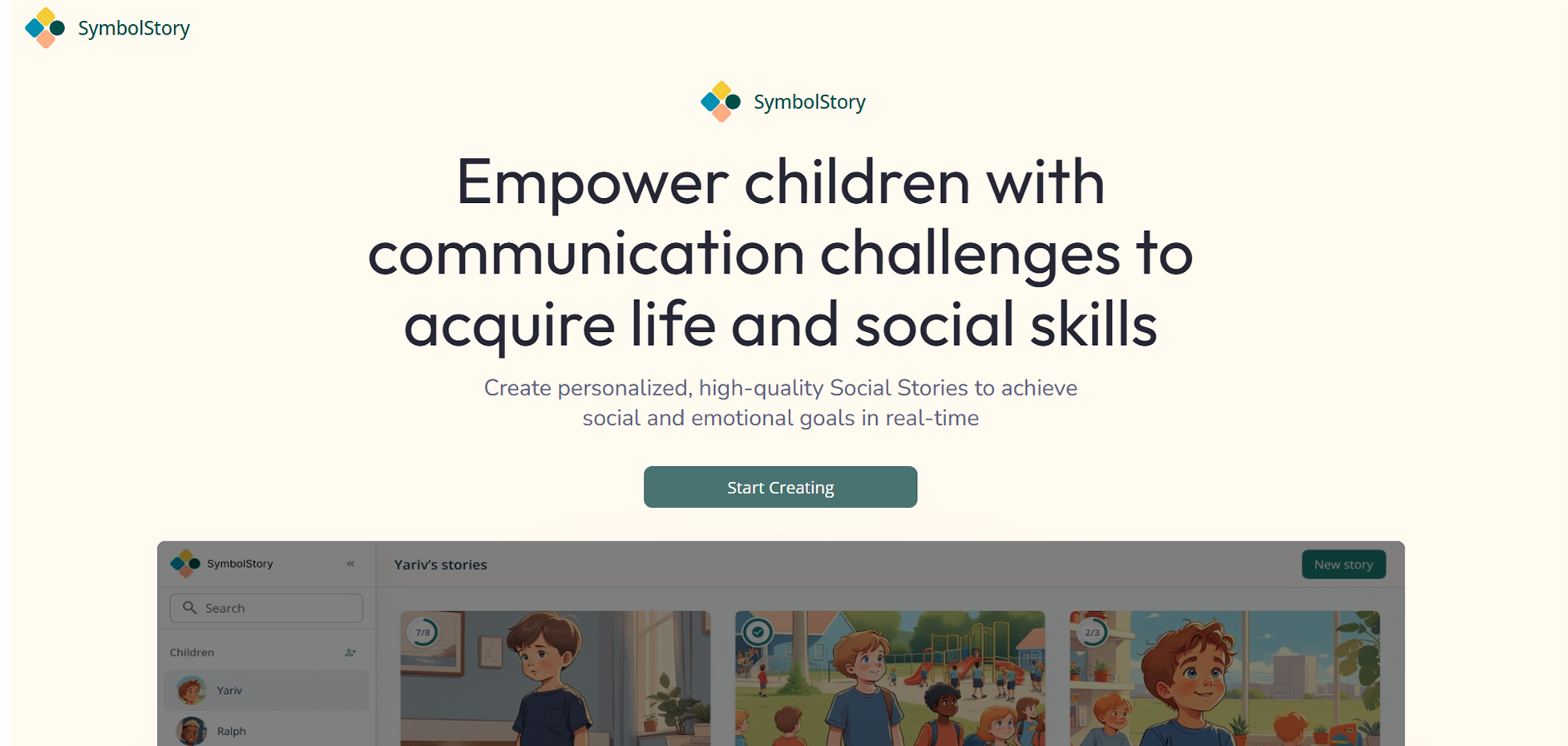
Turning a story-generation capability into a structured product for therapists - from defining a goal and creating a story to planning practice, collecting feedback and reviewing progress.
- Role
- Product leadership, UX research & design
- Product
- AI-assisted social-story platform
- Scope
- Discovery, workflow design, MVP prioritization and delivery
- Stage
- MVP piloted with practicing therapists
01
A generated story was only the beginning
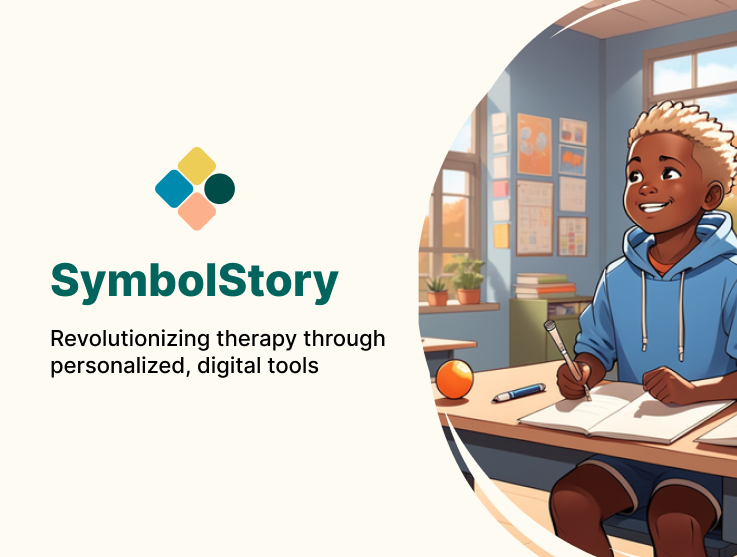
SymbolStory was an early-stage startup creating personalized, AI-generated social stories as a therapeutic aid for children and people with communication challenges. The core technology could generate content. My challenge was to shape the product around how therapists would use that content in their day-to-day work.
The work extended beyond a generation screen: therapists needed a way to connect stories to individual goals, organize practice with caregivers and review feedback over time.
02
Understanding the work around the story
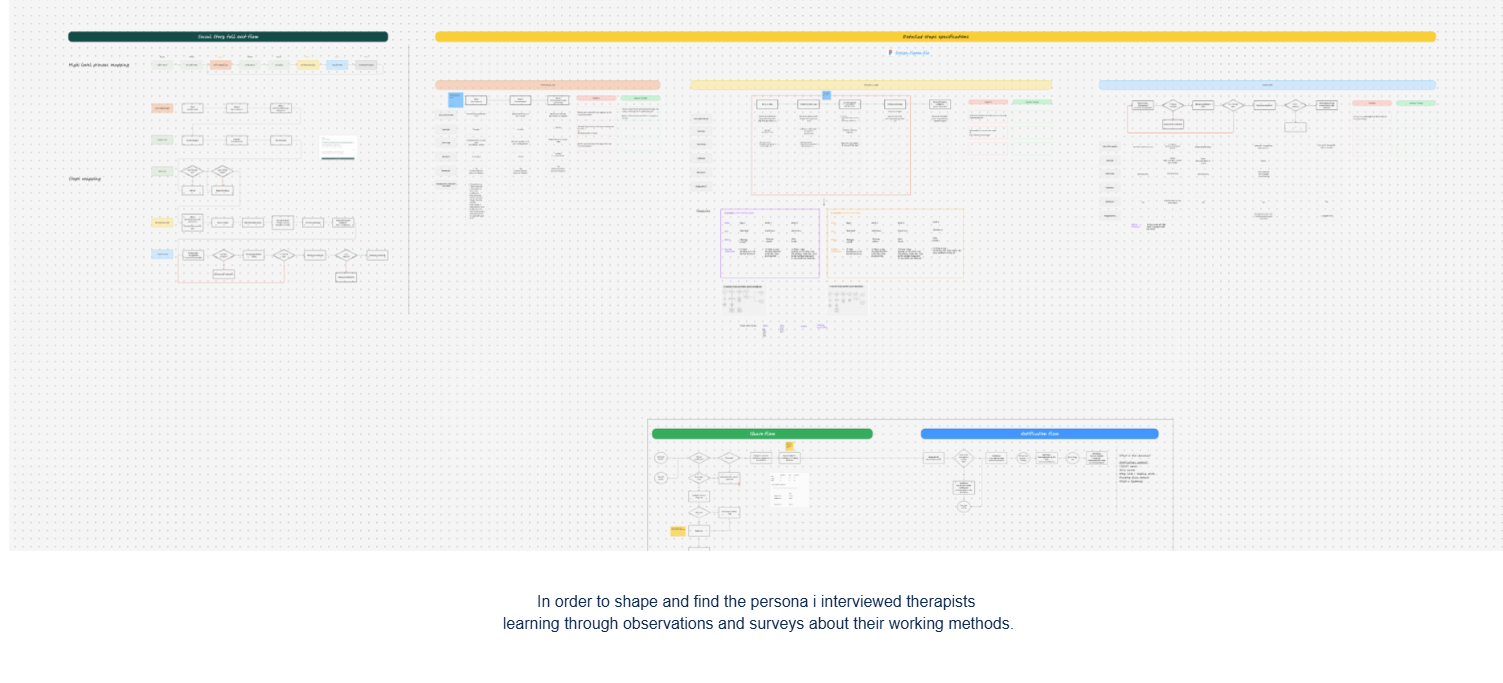
I used therapist interviews, observations, surveys and usability testing to understand working methods, goals and barriers to using a digital tool. The research highlighted difficulty tracking therapeutic goals and a need for a structured way to bring AI-generated content into existing practice.
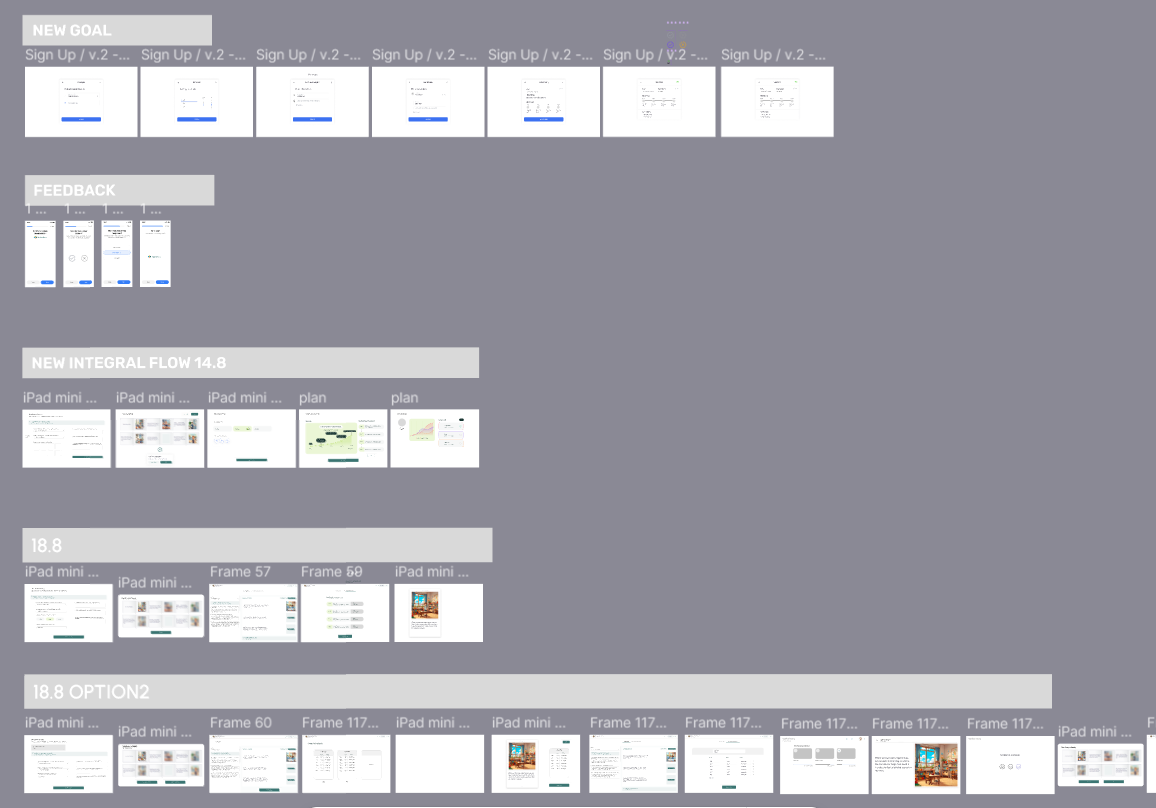
I translated those findings into workflow maps and alternative flows, exploring how therapist and child profiles, goals, stories, practice plans and feedback should relate.
03
Designing a complete loop
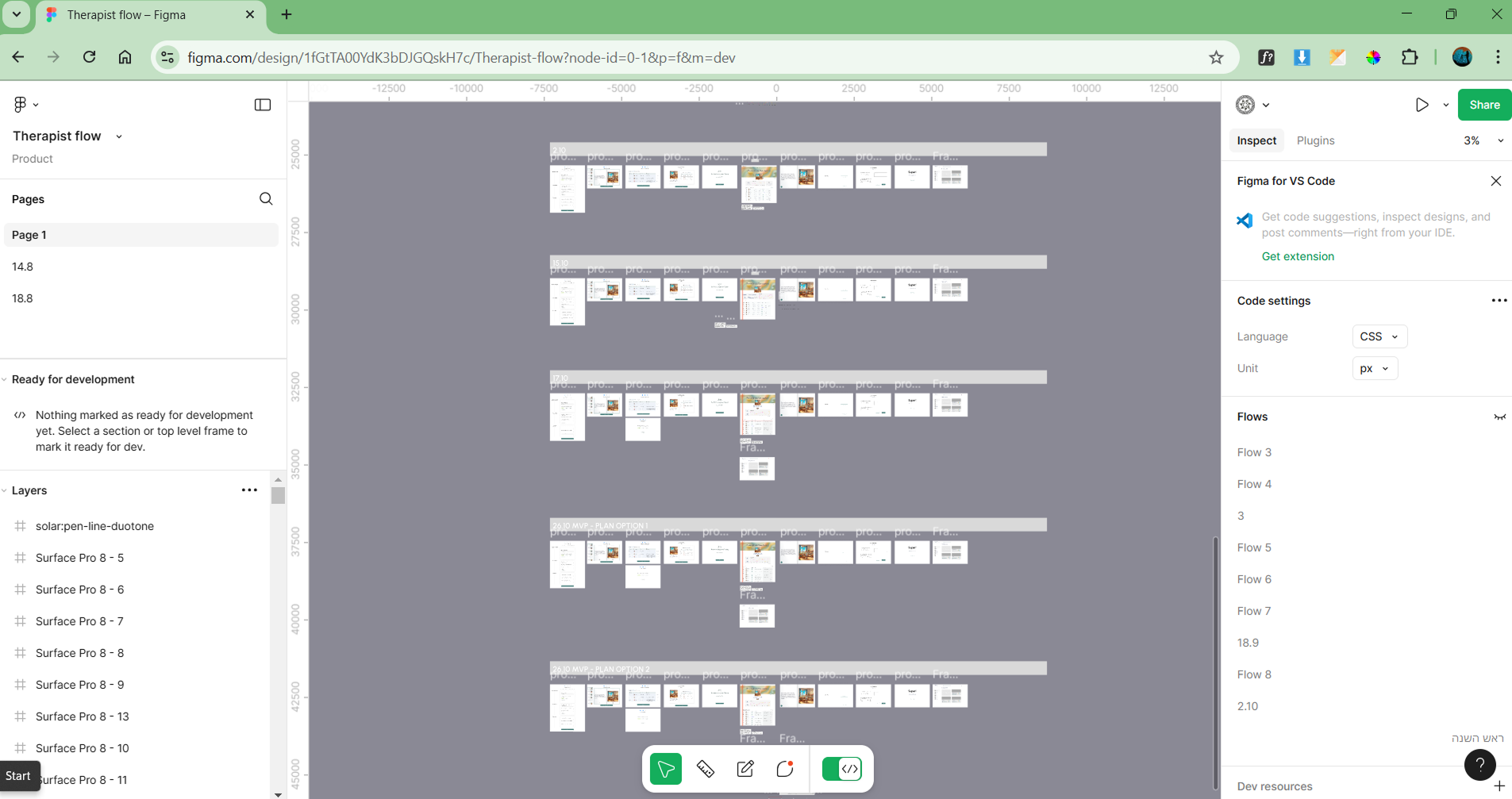
The product flow linked five connected activities, so a story always sat inside a therapeutic purpose and a routine.
- 01Define the goalThe therapist sets the goal and relevant context.
- 02Create the storyGenerate, then review and edit the content.
- 03Plan practiceWhen, where, with whom and how.
- 04Collect feedbackObservations from caregivers and sessions.
- 05Review progressReadings and comments against the goal.
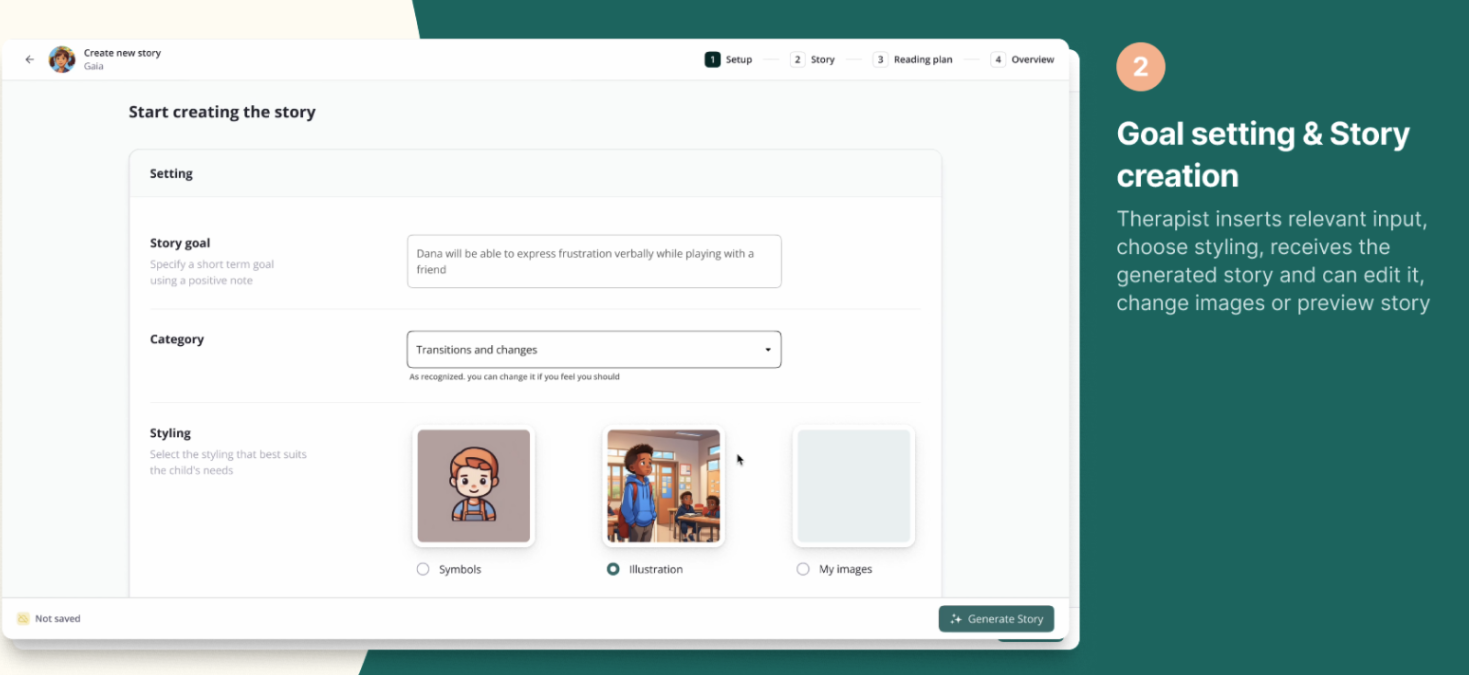
Therapists could provide the goal and relevant context, choose symbols, illustrations or their own images, and review and edit the generated story. The AI provided content within a workflow in which the therapist retained control over the material.
04
Taking the story into daily practice
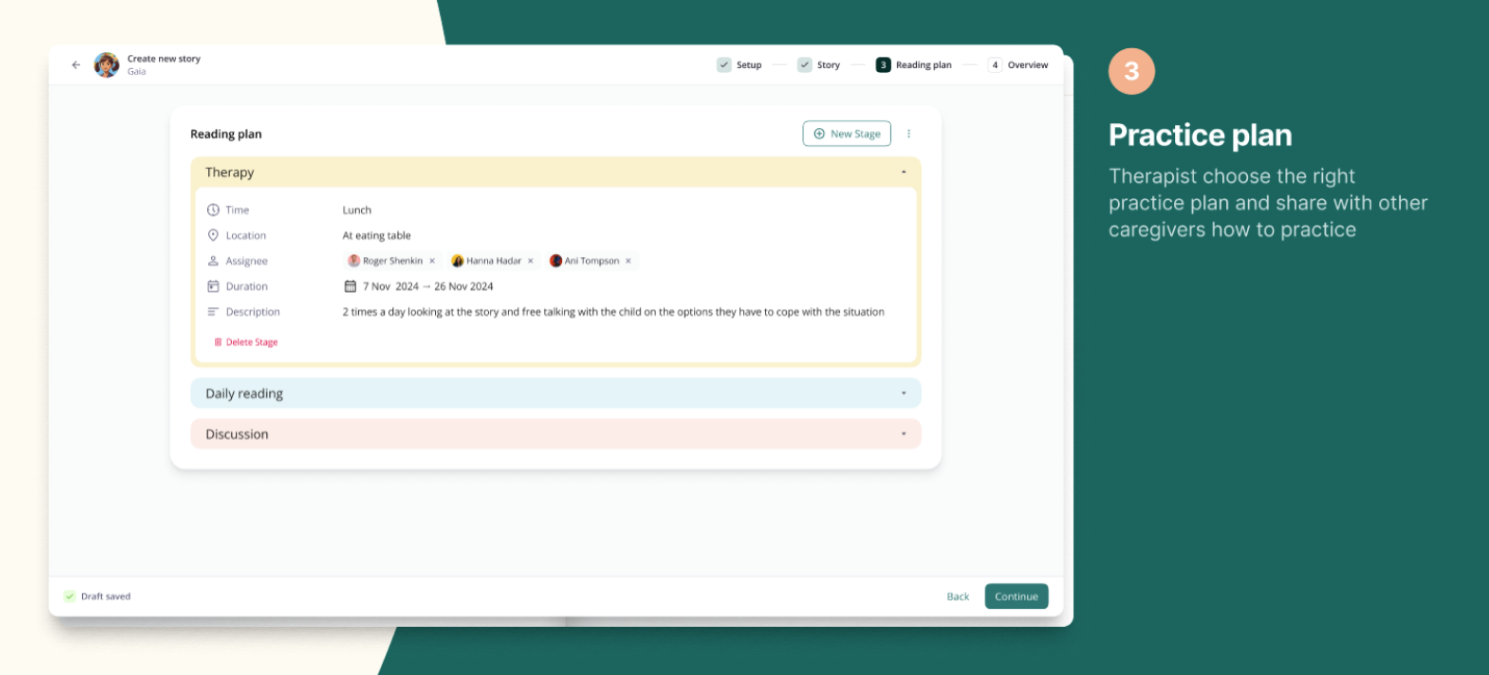
A story needed a practical plan for when, where and with whom it would be used. I designed practice planning around stages, timing, locations, assigned caregivers and instructions, so the content could be connected to an ongoing routine.
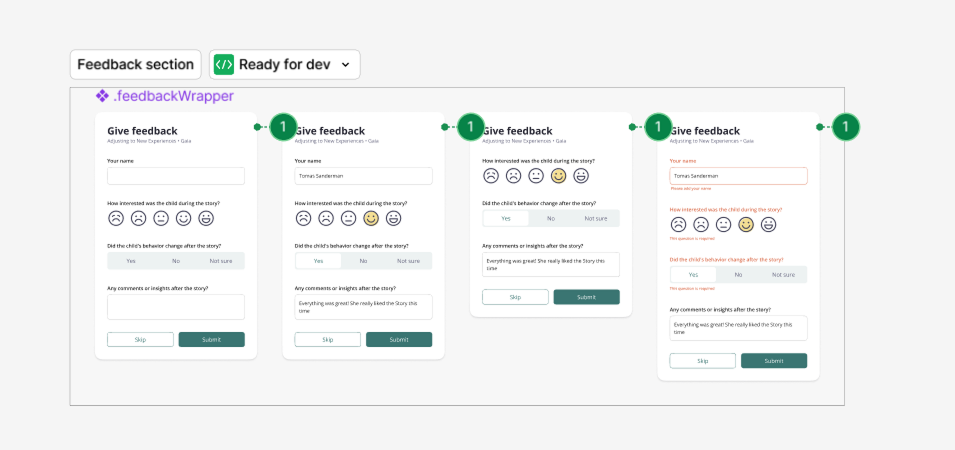
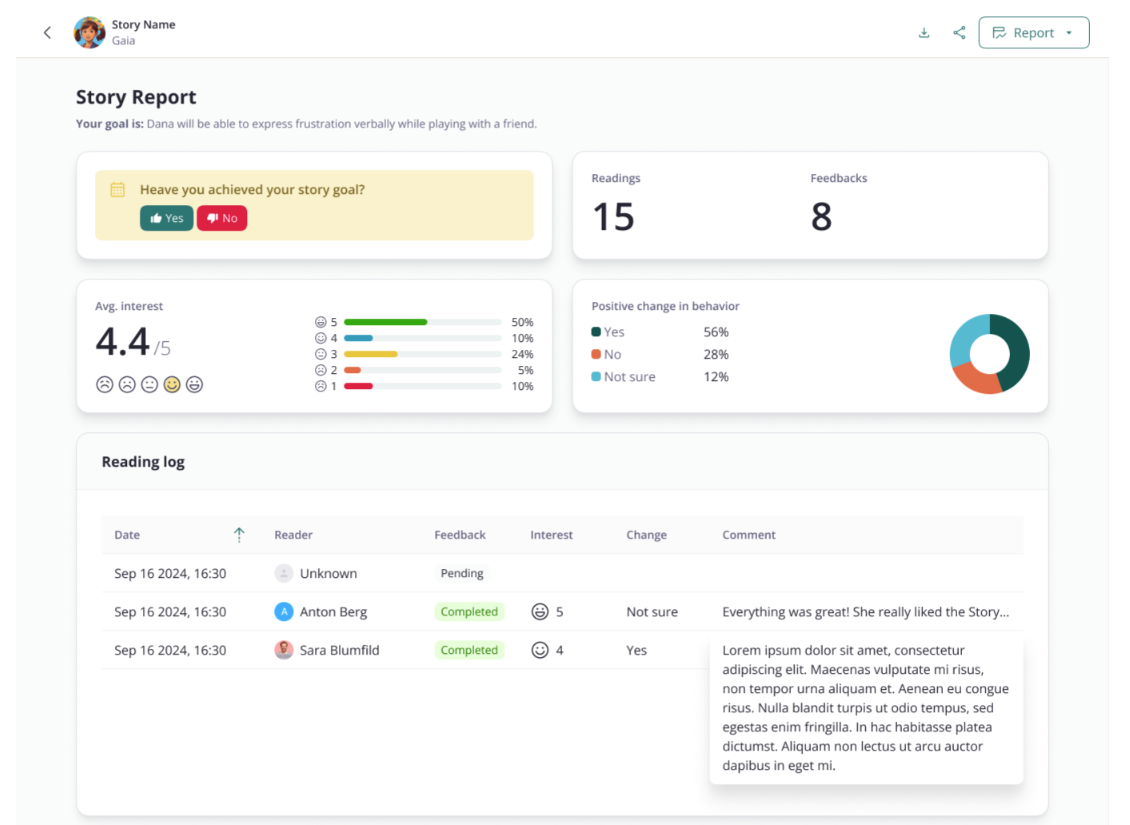
Feedback forms gathered observations about engagement and perceived changes, while the report brought readings, responses and comments together for the therapist to review against the stated goal.
05
From UX direction to an MVP
After defining the core flow, I took on broader product leadership through implementation, working with the founder, developers, designers and potential pilot users. I translated the research and UX direction into priorities and scope decisions, balancing user needs, business goals and technical feasibility.
With limited time and resources, I led prioritization of what to develop first and identified where external APIs could replace building capabilities from scratch. The aim was a lean, testable MVP and earlier feedback before committing to larger internal development.
For part of the venture’s early development, I also worked in partnership with the founder beyond the product itself: participating in conferences, presenting the project to investors, and taking part in accelerator programmes at Kaveret in Israel and at B4i - Bocconi for Innovation, Bocconi University, in Milan.
- Accelerator · IsraelKaveret
- Accelerator · Italy
 B4i - Bocconi for Innovation (opens in a new tab)Bocconi University · Milan
06
The first workflow needed a human guide
The MVP was piloted with practicing therapists. The pilot surfaced a clear adoption challenge: participants needed close guidance to understand the system and get through their first workflow.
This revealed a need for a shared support channel, immediate responses when someone became stuck, and hands-on help to reach that first completed flow.
This changed how I understood onboarding. In this pilot, introducing the product also meant supporting people through the workflow, rather than relying on the interface alone.
Observed needs from the pilot
- 01
Close guidance
Explain the workflow and how to use the system.
- 02
Help at the moment of difficulty
Provide a shared support channel and rapid answers.
- 03
First-flow completion
Help users finish an initial end-to-end flow before expecting independent use.
The first complete workflow became the focus of onboarding.
07
What I would carry into the next iteration
The pilot made guided first use, clearer contextual help and accessible support priorities for the next iteration. These are design implications from the pilot, not claims of subsequent implementation.
My contribution was to connect an AI capability to a usable product model, carry that model through MVP decisions and delivery, and learn from what therapists actually needed to begin using it.
Delivered
- Workflow architecture
- Designed screens
- MVP prioritization
- MVP and therapist pilot
Learned
- Adoption needed guided first use
- Support at the moment of difficulty
- First-flow completion before independent use